In a world that moves fast, comfort is no longer optional. We need clothes that handle sweat, stink, stretch, and sun. Performance fabric does that. But how exactly do they do that?
Performance fabric is not just dependent on woven fabric. Textile chemical manufacturers are enabling the fabrics to be truly high-performing with the help of their innovative speciality chemicals.
In this article, we will learn more about these chemicals and how they actually affect these fabrics.
What are performance fabrics?
Performance fabrics are not only stretchy and breathable but also offer enhanced performance. These textiles actively respond to stress, whether it’s heat, sweat, movement, or exposure to UV light. They are smart fabrics, meant to solve real-world problems such as sweat buildup, odour, UV damage, water soaking, or loss of shape.
These fabrics often start as plain polyester. But with the right speciality textile chemicals, they’re transformed into practical garments. Speciality chemical manufacturers are constantly developing new formulations to create innovative performance fabrics that wick sweat, neutralise odour, block UV rays, and more.
Key Roles of Textile Chemicals in Performance Fabrics
1. Moisture Management
Moisture management is crucial for keeping the fabric dry and comfortable during periods of sweat, heat, or humidity. Synthetic fibers like polyester are hydrophobic by nature. You need to change how water interacts with the fabric to repel the sweat from your skin.
Hydrophilic agents attract water to the fabric’s surface. Because of this, the sweat spreads out and evaporates faster, keeping you dry and comfortable.
2. Odour Control
Body odour results from bacteria metabolising sweat. To combat this, antimicrobial agents such as silver ions or quaternary ammonium compounds are applied to fabrics. These agents disrupt bacterial cell functions, preventing growth and subsequent odour production.
3. Enhancing Elasticity
Fabrics provide stretch but can degrade over time. Chemical crosslinking agents are used to stabilise these fibres, enhancing their resilience and ensuring the fabric maintains its shape and elasticity through repeated use.
4. Water Repellency
Fabrics tend to absorb rain, become heavy, cling to the body, and remain damp for hours. To prevent discomfort, heaviness, and dampness, we need fabric that repels water from the outside.
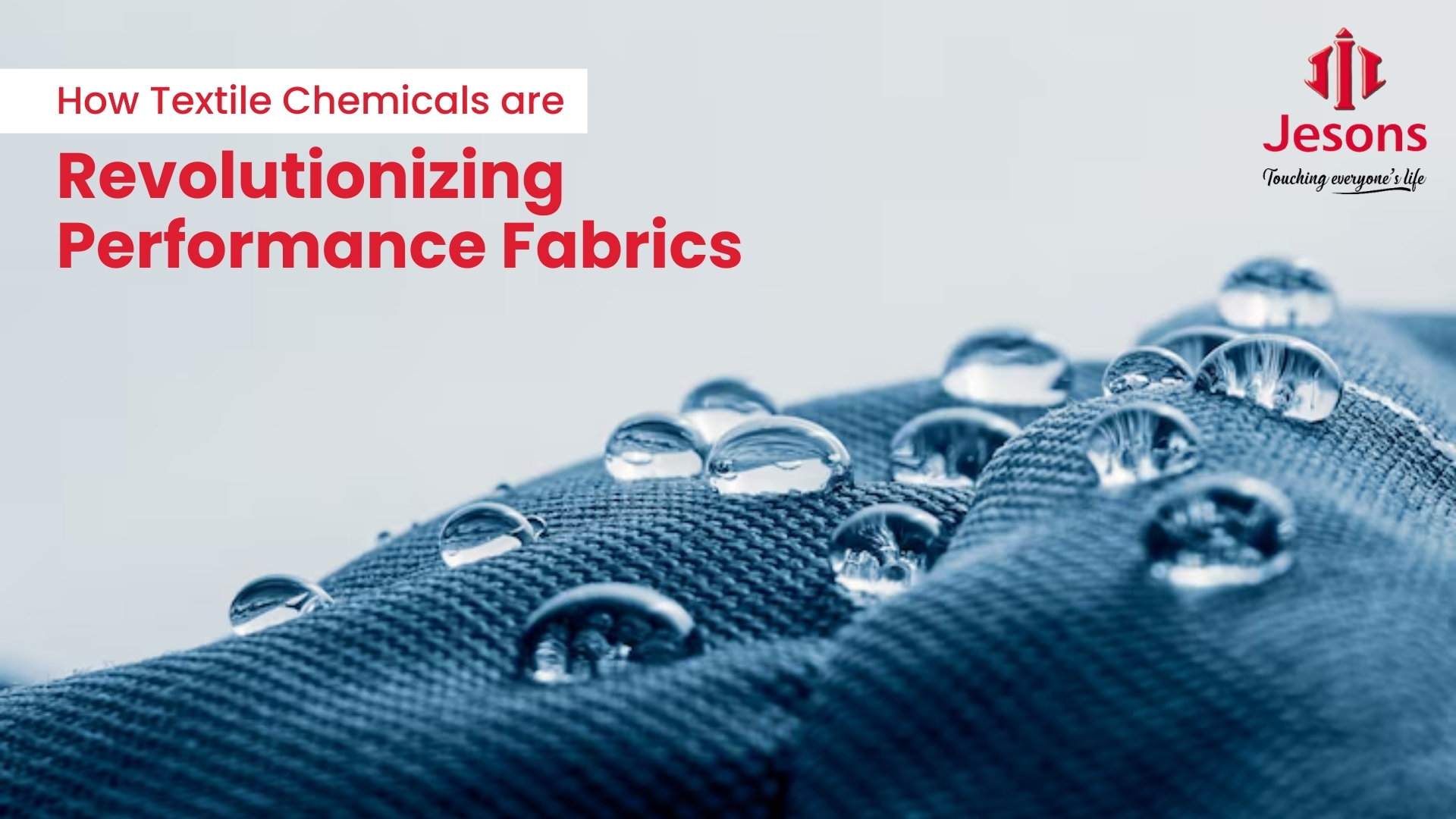
To achieve water repellency, fabrics are treated with durable water repellent (DWR) finishes. These treatments lower the surface energy of the fabric, causing water to bead and roll off.
5. UV Protection
UV rays damage the cloth and negatively affect the skin of the wearer. Fabrics treated with UV-absorbing agents can absorb or reflect harmful UV rays, protecting both the fabric and the wearer from sun damage.
6. Innovation in Performance Fabrics with Textile Chemicals
As customers demand performance fabrics that are not only smarter but also cleaner, the role of textile chemicals is evolving rapidly. We’re seeing a clear shift in textile chemicals manufacturers in India and worldwide toward eco-friendly speciality chemicals that reduce water use, energy consumption, and waste.
At the same time, there is rapid growth in functional finishes that embed technology into textiles without compromising comfort. Whether it’s moisture sensors in athletic wear, antimicrobial scrubs for healthcare, or thermal-regulating uniforms for defence. Several Indian manufacturers of leather chemicals and synthetic leather are now producing vegan leather.
Conclusion
Performance fabrics today are smarter, stronger, and more sustainable- thanks to advances in speciality chemicals. But the revolution is just getting started, and it is led by textile finishing agents and speciality chemical manufacturers worldwide.
Ready to lead the change in performance fabrics? Connect with our team to explore custom chemical formulations tailored to your fabric’s needs.
FAQs
Which industries are driving demand for textile chemical innovations?
Are chemically treated performance fabrics safe for the skin?
Yes, textile chemicals are safe to use when appropriately regulated.
How do textile chemicals improve fabric durability and functionality?
Textile chemicals increase the strength of fabric, protect against fading, and add features such as stretch and shape retention. They also add special features to fabric, such as fire resistance and sweat control, which further enhance its functionality.
What types of textile chemicals are used in performance fabrics?
Performance fabrics utilise a range of chemicals, including finishing agents, softening agents, antimicrobial treatments, UV absorbers, and moisture-wicking agents.