Table of Contents
- Why Demand for Pressure Sensitive Adhesives Is Growing
- Electronics: Bonding in Compact, Lightweight Designs
- Medical Applications: When Adhesion Needs More Precision
- Packaging and Labels: Performance at Production Speed
- What This Means for Adhesive Development
- Developing Adhesives Around Application Needs
- Conclusion
- FAQs
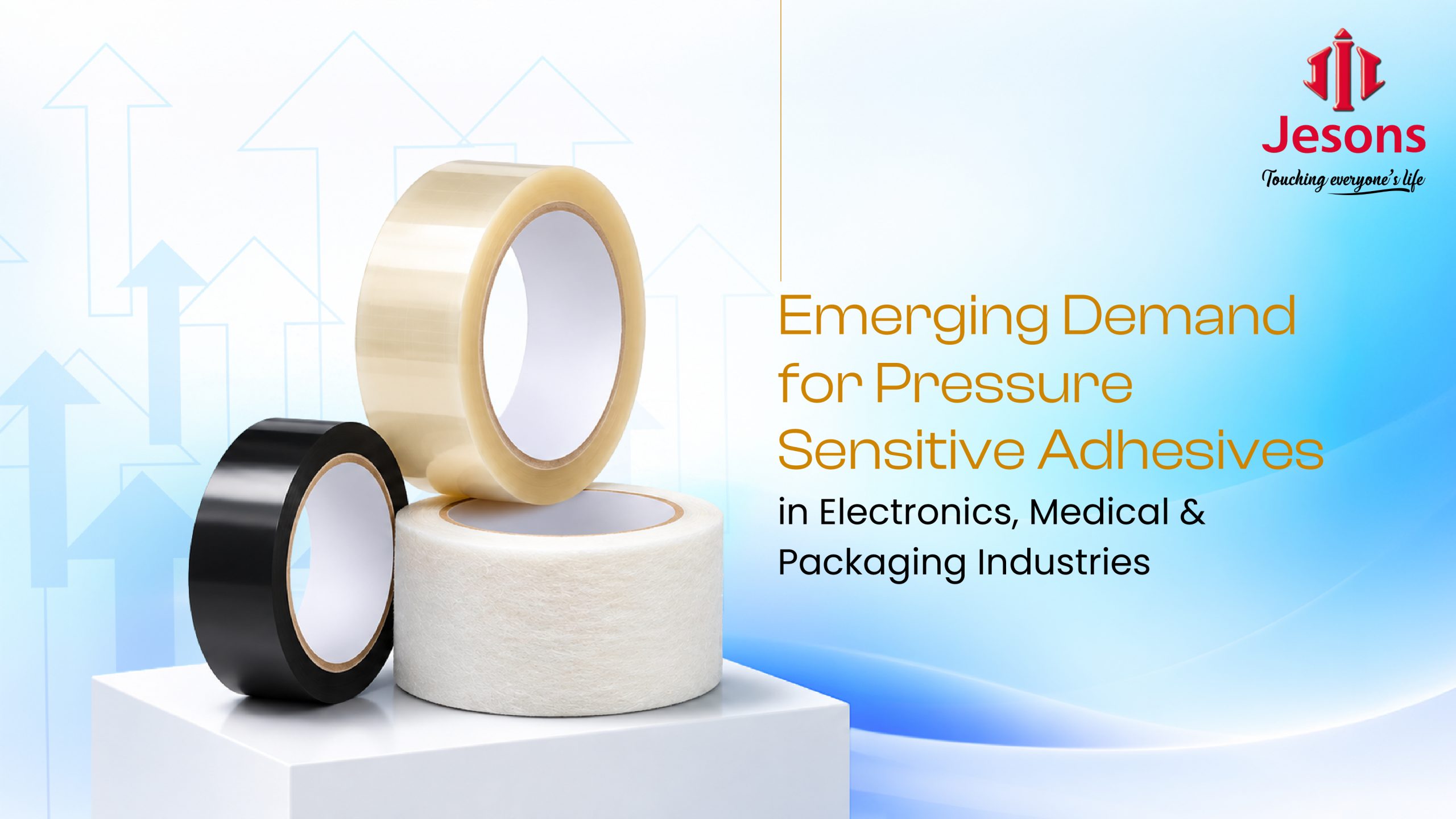
Pressure sensitive adhesives (PSAs) are used in products we encounter every day, from packaging labels and tapes to protective films and medical dressings. Their appeal lies in a simple feature: they can bond to a surface when pressure is applied, without requiring a separate heat or solvent activation step.
What is changing is the range of applications they serve. Electronics are becoming more compact, medical products have specific adhesion requirements, and packaging lines continue to demand speed and consistency. These developments are creating new considerations for pressure sensitive adhesive manufacturers, particularly when a standard formulation may not meet every application’s needs.
Why Demand for Pressure Sensitive Adhesives Is Growing
The market’s expansion is driven by several industries, not a single dominant use case. Packaging, labels, tapes, healthcare and electronics all rely on PSAs for different reasons. There is also a growing interest in lightweight, easy-to-apply bonding solutions and water-based, solvent-free PSA technologies.
The opportunity, therefore, is not just to produce more adhesive. It is to develop formulations suited to increasingly specific applications.
Electronics: Bonding in Compact, Lightweight Designs
As electronic devices become thinner and more compact, manufacturers need ways to attach components, secure displays and apply protective films without adding unnecessary bulk.
PSAs can support applications such as component mounting, surface protection and assembly. Depending on the use, the adhesive may need to offer reliable adhesion, clean application, temperature resistance or transparency.
For industrial adhesive manufacturers, electronics present a useful example of how bonding requirements can change with product design. The adhesive must work with the materials involved and meet the conditions the finished component will encounter.
Medical Applications: When Adhesion Needs More Precision
Medical and healthcare products bring a different set of requirements. PSAs are used in products such as wound dressings, surgical tapes and wearable medical devices, where adhesion needs to be balanced with comfort and the intended duration of use.
A strong bond alone is not enough. Skin-contact applications may require controlled adhesion, breathability and removal that minimizes discomfort or skin damage. Product safety and relevant regulatory requirements also need careful consideration.
These demands call for application-specific PSA development rather than a one-size-fits-all approach.
Packaging and Labels: Performance at Production Speed
Packaging remains an important application area for PSAs. E-commerce, consumer goods and logistics all rely on labels, tapes and protective materials that can withstand handling while moving efficiently through production and distribution.
For label adhesive manufacturers, properties such as tack, peel strength, clarity, and coating consistency affect both application and final performance. The requirements also vary between paper labels, filmic labels and specialist applications.
At high production speeds, even small inconsistencies in coating or bonding can disrupt operations. This is why pressure sensitive adhesive manufacturers need to consider machine conditions alongside the adhesive’s performance after application.
What This Means for Adhesive Development
Across these industries, the same broad trend is emerging: adhesive selection is becoming more closely tied to the end application.
Key considerations include:
- Substrate compatibility: The adhesive must work with the materials being bonded.
- Performance requirements: Tack, peel, shear strength and temperature resistance vary by application.
- Processing conditions: Coating method, production speed and handling influence formulation choices.
- Sustainability: Water-based and other lower-impact technologies are receiving greater attention.
For industrial adhesive manufacturers, balancing these factors is key to developing solutions for changing market needs.
Developing Adhesives Around Application Needs
At Jesons Industries Ltd., we approach adhesive development with the intended application in mind. Our Bondex portfolio includes solutions for paper and filmic labels, tapes and other specialized bonding requirements.
We continue to focus on formulation expertise and application-led development, recognizing that different substrates, production processes and end uses call for different adhesive characteristics.
Conclusion
The growing use of PSAs in electronics, medical products and packaging reflects how widely bonding requirements now vary. Each sector brings its own priorities, from compact assembly and skin-contact performance to high-speed labelling.
For pressure sensitive adhesive manufacturers, the opportunity lies in understanding these differences and developing formulations that meet them without compromising the requirements of the finished product.
FAQs
Are sustainable technologies influencing PSA development?
How are industrial adhesive manufacturers responding to changing demand?
They are developing more application-specific formulations and exploring technologies that balance performance, processing efficiency and sustainability.
What should adhesive for labels manufacturers consider?
They should consider the label material, required tack and peel strength, coating consistency, production speed and end-use conditions.
Why are pressure sensitive adhesives important in electronics?
They support component mounting, insulation and surface protection where compact design, lightweight construction, and reliable bonding are important.
What are pressure sensitive adhesives used for?
PSAs are used in tapes, labels, protective films, medical dressings and electronic components. They form a bond when light pressure is applied.