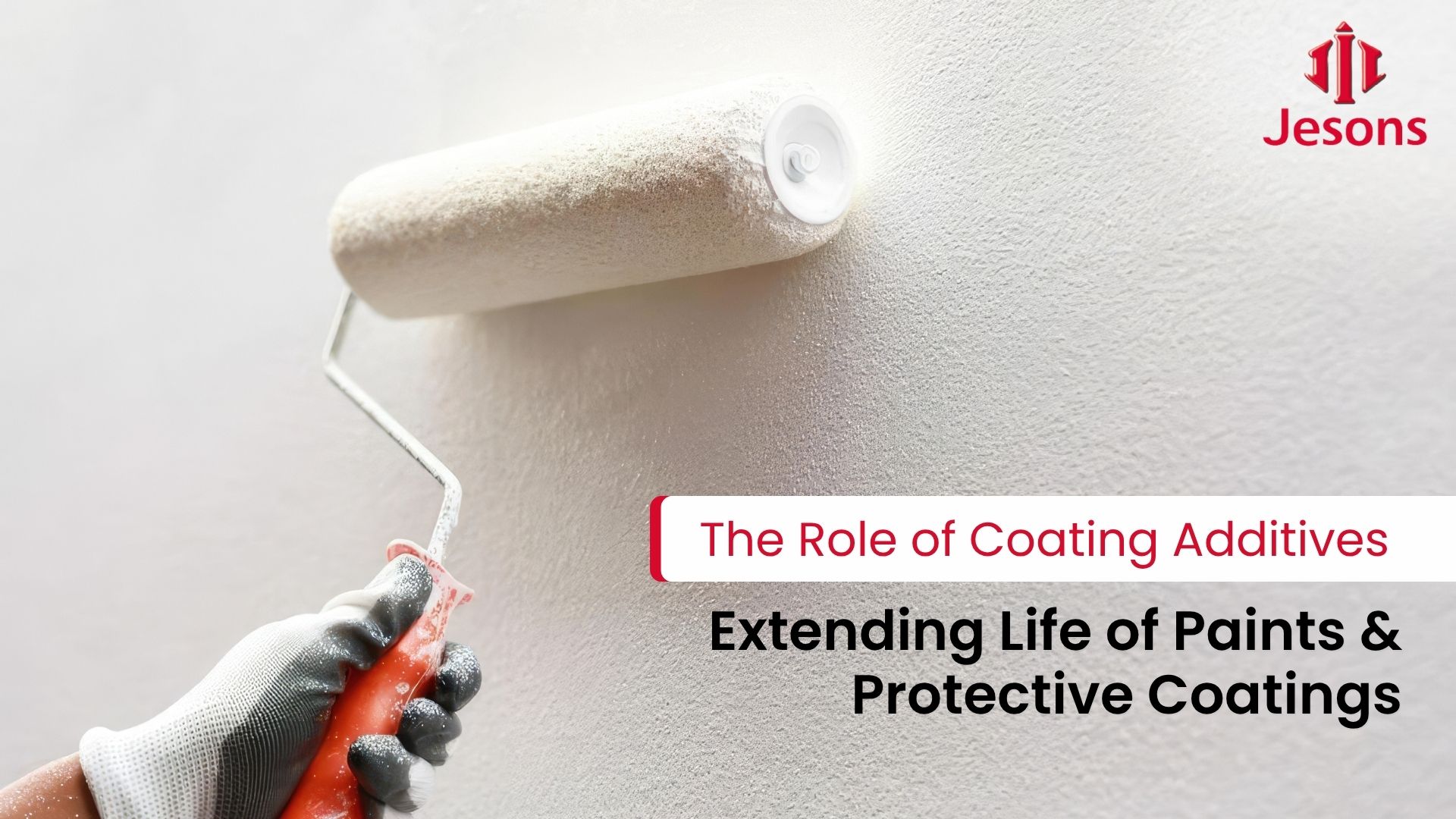
A coating may look perfect when it first leaves the production line. The real test, however, begins after application. Sunlight, moisture, temperature changes, abrasion, chemicals and everyday exposure can gradually affect how a coating looks and performs. Gloss may fade. The film can weaken. Surface defects may begin to appear, while the substrate underneath becomes more vulnerable.
This is why paint and coating durability cannot be attributed to the binder alone. Pigments, resins, and other formulation components all play a role. So do coating additives.
What Are Coating Additives and Why Do They Matter?
Paint and coatings may appear simple, but their formulations are carefully balanced systems.
Along with the binder, pigments, and solvent or water, additives address specific challenges or enhance particular properties. Additives make up only about five per cent of a coating formulation. Their contribution is significant despite their relatively low dosage.
Depending on the formulation, they can influence pigment dispersion, appearance, foam control, flow, levelling, substrate wetting, and some resistance properties.
Consider some of the issues that can arise across a coating’s lifecycle: pigments settling during storage or application, foam formation during manufacturing, poor coverage during application or surface defects after the film has formed. Exposure to moisture or sunlight can create another set of challenges altogether.
The right additive chemistry helps formulators address these issues at different stages. This is what makes coating additives manufacturers an important part of the wider coatings value chain. Additives aren’t included simply to improve appearance; they can influence how consistently the coating performs from manufacturing through the end of its service life.
How Do Coating Additives Contribute to Coating Durability?
A coating’s durability often depends on how well it withstands the conditions it was designed to face. Different additives can address different points of failure.
Improving Resistance to Environmental Exposure
Exterior paints and protective coatings are exposed to continuous environmental stress. UV radiation can contribute to fading and degradation, while rain, humidity and temperature fluctuations can affect the coating film over time.
UV absorbers and other performance-enhancing additives can help improve resistance to these conditions. Appropriate formulations can also support moisture resistance and help reduce premature deterioration.
This is particularly relevant for exterior architectural coatings. For a roof paint chemicals manufacturer, for instance, durability must be considered in relation to prolonged sun exposure, changing weather conditions and the need for the coating to retain its protective properties over time.
Supporting Better Film Formation
A coating can protect effectively only when it forms a uniform, continuous film.
Poor flow, inadequate levelling or defects such as pinholes can create weak points in the coating. These areas may allow moisture and contaminants to reach the underlying substrate.
Wetting agents, flow and levelling additives, coalescing agents and defoamers can support better film formation. The result is a smoother finish and better film integrity that contributes to longer-term protection.
Maintaining Appearance and Surface Quality
Durability is also visual.
Loss of gloss, uneven surfaces, craters and other defects can affect the appearance of decorative and industrial coatings long before the coating reaches the end of its functional life.
Surface modifiers and levelling additives help improve the appearance and uniformity of the applied coating. Dispersing agents, meanwhile, support consistent pigment distribution, which can influence colour development and stability.
For paint coating manufacturers, maintaining these properties consistently across batches is just as important as achieving them in the first place.
Improving Resistance to Wear and Other Stresses
Coatings used on industrial equipment, high-traffic surfaces or frequently handled products can experience rubbing, abrasion and impact.
Certain additives can modify surface properties to improve resistance to wear and scratching. Adhesion promoters also help strengthen the bond between the coating and challenging substrates.
Where corrosion is a concern, anti-corrosion additives can provide another layer of protection by helping limit deterioration of the underlying metal.
Key Types of Coating Additives
The exact additives used in a formulation will vary depending on the coating chemistry and application. Some of the key categories include:
Dispersing and wetting additives: Help pigments and fillers distribute more uniformly while improving wetting of the substrate. This can support colour consistency, coverage and formulation stability.
Defoamers: Control unwanted foam generated during manufacturing and application, helping prevent defects such as pinholes and voids.
Rheology modifiers: Control viscosity and flow so that the coating can be applied effectively without excessive dripping or sagging.
Flow and levelling additives: Help the coating spread and level more evenly after application, reducing visible application marks and certain surface defects.
Coalescing agents: Particularly relevant to water-based coatings, where they support film formation under different drying conditions.
Biocides/Antimicrobial additives: Help control microbial growth in water-based formulations during storage or, depending on the system, protect the applied coating against mould and mildew.
UV absorbers and light stabilizers: Support resistance to UV-related degradation and are particularly important for coatings exposed to prolonged sunlight. Light stabilizers also enhance colour retention and gloss stability.
Speciality protective additives: Depending on the application, these may improve properties such as water resistance, heat stability, corrosion resistance or scratch resistance.
The goal is not to add more additives. It is to select the right combination for the performance required.
Why Formulation Expertise Matters When Selecting Coating Additives
Additives do not work in isolation.
Their performance depends on the rest of the formulation, including the binder, pigments, fillers and other functional ingredients. An additive that delivers the desired result in one coating system may behave differently in another.
This is where formulation expertise becomes important. Testing helps determine whether an additive package can deliver the required balance between application properties, appearance, durability and cost. It also helps identify potential compatibility issues before a formulation reaches large-scale production.
For coating additives manufacturers, the value increasingly lies not only in supplying individual products but in understanding how different chemistries work together within a complete system.
This is equally relevant when developing specialised exterior applications. A roof paint chemicals manufacturer, for example, must consider several performance requirements together rather than treating UV resistance, water resistance and film durability as separate concerns.
At Jesons Industries Ltd., expertise across advanced coating solutions and speciality additives supports the development of application-focused solutions for industries including architectural coatings and construction chemicals.
Conclusion
Coating additives may account for only a small part of a formulation, but their impact can extend across the entire life of a paint or protective coating. They help address challenges related to manufacturing, storage, application, film formation and long-term resistance.
As coating requirements continue to evolve, coating additives manufacturers and speciality chemical companies will play an increasingly important role in helping develop systems that combine durability, efficient application, high performance, and long-term protection.