The construction industry has evolved far beyond bricks and manual craftsmanship. Today, modern structures rely on a broad spectrum of construction chemicals, with each formulated to enhance durability, ease of application, strength, and performance. With the construction chemicals industry expected to grow exponentially over the next decade, specialty chemical manufacturers will continue to reshape the sector with innovative solutions.
In this blog, we explore the most widely used construction chemicals and their importance to modern engineering excellence.
Cement Additives
Cement additives directly impact the setting time, strength, and durability of concrete. These additives are added to the cement during manufacturing to enhance its properties. Some of the common cement additives include:
Dispersants: Help prevent cement particle aggregation to maintain uniformity.
Fluid loss control agents prevent water from escaping the cement mix into porous formations, thereby maintaining slurry strength.
Accelerators: Accelerate cement hydration to reduce the setting time of concrete.
Retarders: Delay the setting time and hardening of cement, extending the workability time of concrete.
With infrastructure expansion accelerating nationwide, construction chemical manufacturing companies in India are continuously improving additive technologies to meet diverse climatic and performance requirements.
Waterproofing Chemicals
As the name suggests, waterproofing chemical compounds are designed to prevent water ingress into structures. They are used in various forms, such as additives, coatings, or membranes, to make concrete or mortar impermeable to water. They can be used in liquid, solid, or slurry form, as well as for surface coating by dipping and spraying. Waterproofing chemicals also enhance coatings that emphasize protective properties rather than aesthetics. They are commonly used in industrial coatings for corrosion control of steel or concrete.
Construction Adhesives
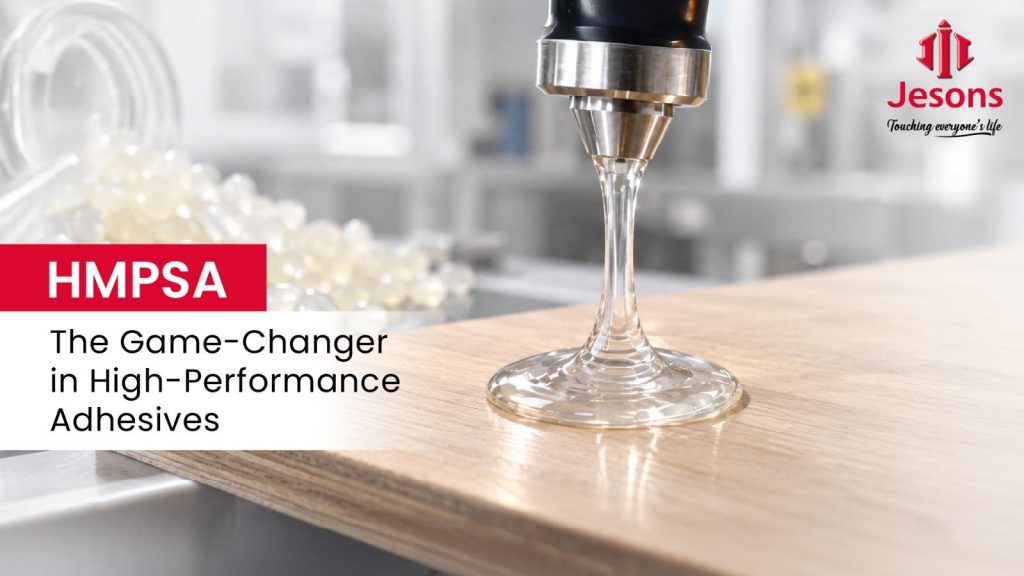
Construction adhesives are primarily used to bond surfaces in construction projects. Consisting of synthetic polymers, fillers, and resins, adhesives form a strong, durable bond. Depending on the end use, one can choose an adhesive in liquid, paste, or tape form. As sustainability becomes a priority, leading construction adhesive manufacturers are shifting to water-based and low-VOC adhesives.
Majorly, there are two types of adhesives used in construction:
Structural:
- 1000 – 4000 lb-force psi strength
- Bears large loads
- One or two-part systems that undergo curing
- Used in structured parts like concrete-to-concrete, metal bonding, masonry, etc.
- Can be epoxy, structural polyurethanes, silicones, and structural acrylics
Non-structural:
- Less than 1000 psi
- Do not bear large loads
- Typically, one-part solvent-based polymers
- Used to bond decorative materials like panels, fibers, particle boards, etc.
- Can be emulsion or dispersion adhesives, solvent-based, natural, renewable, neoprene contact adhesives, or glues.
Paint and Coating Additives
Paints can do more than just beautify the surface. Adding additives to the paint can impart specific properties, such as boosting performance, improving moisture resistance, preventing foam bubbles, enhancing fire resistance, providing UV protection, extending shelf life, and more.
As aesthetics and performance expectations rise, additives for paint manufacturers enable wall finishes to resist moisture, dirt, microbial growth, and weathering. These innovations are key to developing high-quality architectural and protective coatings used in residential and commercial projects.
Coating additives, on the other hand, are functional additives added in trace amounts to coating formulas to improve surface effects, construction performance, storage stability, and final film quality. Almost all types of coatings, from powder and automotive coatings to latex and industrial coatings, rely on various additives to meet their performance requirements. Coating additive manufacturers enhance coating durability with additives such as UV absorbers, scratch-resistant agents, hydrophobic agents, and heat stabilizers.
As one of the leading coating additive manufacturers, Jesons Industries Ltd. offers advanced formulations for safer, smarter coating systems.
Grouts and Anchoring Chemicals
Grouting is used to improve structural stability and enhance the surface’s load-bearing capacity. It is a blend of cement, water, and chemical additives that helps create a clean, finished look and extend the lifespan of structures.
Anchoring chemicals use specialized adhesives or resins to secure anchors to substrates such as concrete. It distributes loads evenly and is suitable for a range of base materials. It enhances overall structural integrity, making it ideal for handling fragile or aged surfaces.
Sealants
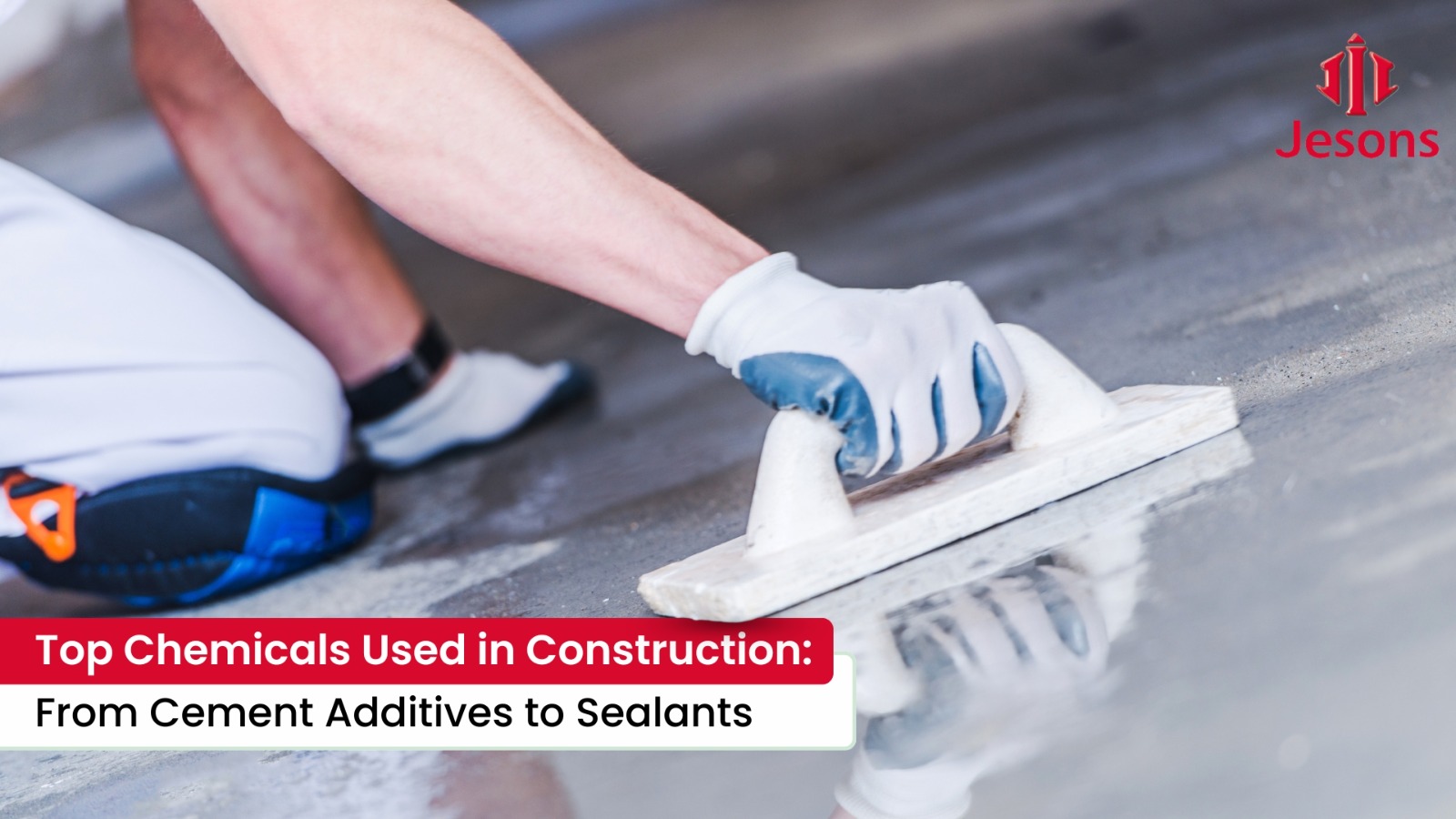
Sealant is a chemical layer in the flooring system. Flooring systems are designed to create durable and aesthetically pleasing floor surfaces. Sealants are chemical compounds used to fill gaps between concrete, joints in concrete roads, and close expansion joints. This layer helps to prevent fluids and other substances from passing through surfaces and mechanical joints.
Commonly, sealants can be categorized into four types:
Polysulfide Sealants: Used in construction as expansion joints for structural joints and concrete roads.
Silicon Sealants: Excellent for resisting temperature extremes and waterproofing.
Acrylic Sealants: A paintable sealant with less flexibility, generally used for gap or crack-filling and molding.
Polyurethane Sealants: Known for their high durability and resistance to weathering, they are used in high-quality, high-altitude applications.
These solutions are strengthened by innovations from specialty chemical manufacturers, who supply the polymers and additives that enhance elasticity, UV resistance, and longevity.
Concrete Repair Materials
Construction chemicals have also begun to make an impact in the field of repair and reinforcement. These materials consist of specialized compounds that restore the structural integrity of damaged concrete. These products include cement-based repair mortars, polyester- and epoxy-based resin mortars, structural additives, corrosion inhibitors, and more. Old and outdated structures can be renovated using methods like steel jacketing, concrete coating, and FRP (Fiber Reinforced Plastic) coating.
Conclusion
As the industry advances, the role of innovative construction chemicals will only grow stronger. From the concrete foundation to the final coat of paint, every layer benefits exponentially from chemical innovation. As a trusted construction chemical manufacturing company in India, Jesons Industries Ltd. continues to offer high-performing, sustainable solutions that ensure future structures are not just built, but built to last.