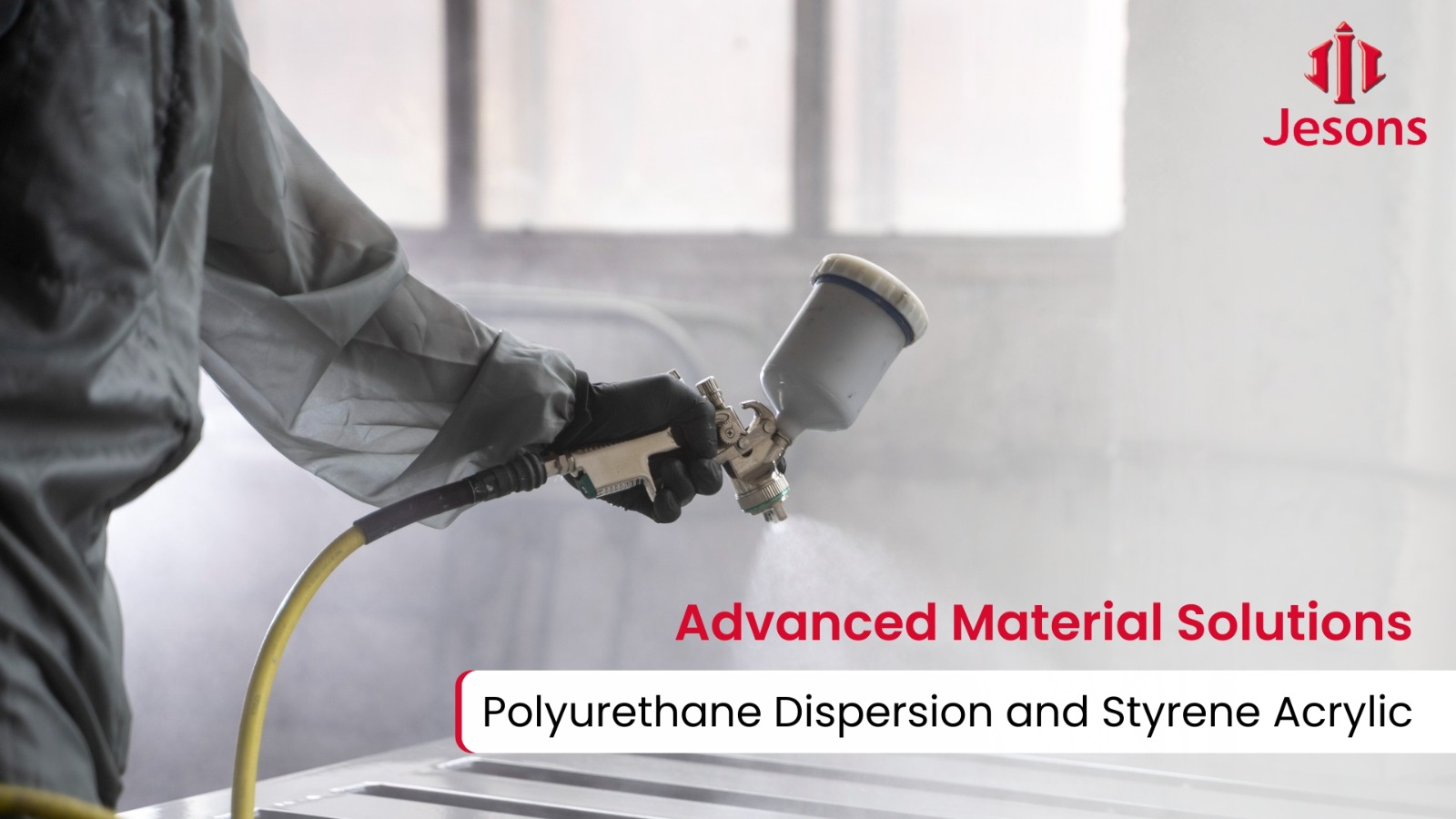
Consumers are increasingly seeking alternatives to solvent-heavy solutions that are safer for themselves and the planet. This shift has brought water-based polymer technologies to the fore. Out of these, advanced material solutions like polyurethane dispersions (PUDs) and styrene acrylic emulsions exhibit properties similar to solvent-based systems, without the environmental and health costs associated with them.
In this blog, we will discuss these two rising water-based polymer systems in detail, highlighting their composition, benefits, and varied applications.
Polyurethane Dispersions
Polyurethane dispersions or PUDs are a blend of a polyol, a diisocyanate, a chain extender, and a crosslinking agent. This formulation is then dispersed in water to stabilize it, leading to very low or, in some cases, zero volatile organic content (VOC).
They allow one-component (1K) and two-component (2K) coatings to be formulated with good substrate adhesion, chemical resistance, corrosion protection, and high durability. Unlike rigid resin systems, they form films that can stretch and recover, making them ideal for applications where movement, abrasion, or repeated stress is expected.
As industries continue to move away from solvent-heavy chemistries, PUDs are becoming a cornerstone of modern polymer development. In fact, they are expected to reach USD 262 million globally by 2035.
Styrene Acrylic Emulsions
Styrene acrylic emulsions are highly versatile water-based polymer dispersions. They are obtained by copolymerizing styrene with various acrylic monomers. These water-based emulsions are valued for their balance between ease of processing and performance.
The unique characteristics of the two monomers make styrene-acrylic emulsions a core raw material in many modern adhesive, textile, ink, and coating formulations. These polymer emulsions are ubiquitous in industries that use water-based systems because of their durability, weather resistance, and cost efficiency.
One drawback of styrene-acrylic dispersions is their tendency to yellow when exposed to direct sunlight. As the styrene content in the formulation increases, yellowing increases, though other factors, such as residual free radicals from the polymerization process, can also cause discoloration. Despite their drawbacks, styrene-acrylic polymers are still widely used in construction and coatings.
Benefits of The Two Water-based Systems:
Beyond their environmental benefits, both polymer systems offer multiple advantages across different applications.
PUDs:
The unique chemistry and flexibility of PUDs provide performance and environmental benefits in a single solution. PUDs can be formulated to produce tough, scratch-resistant, stable wall coatings. These dispersions have a lifespan of almost 10 years, even in exposed areas, thanks to their resistance against yellowing, peeling, and cracking.
Some of the other notable benefits of PUDs include:
- Excellent adhesion to various substrates
- Abrasion, chemicals, UV & water resistance
- Highly flexible and adaptable
- Enhanced durability & aesthetics
- High tolerance against solvents
Styrene-Acrylic Emulsions:
Styrene-acrylic polymers offer superior water resistance and moisture vapor transmission rate (MVTR) compared to all-arylic polymers. For this reason, these polymers have proven effective for exterior applications.
Due to their high glass transition temperature (Tg), styrene-acrylic polymers are durable and exhibit good mechanical properties. Styrene-acrylic polymers are often less expensive than pure acrylic emulsions or PUDs.
Some of the other notable advantages of styrene acrylics include:
- Balanced tensile strength and elongation
- Strong pigment-binding capability
- Excellent weather & stain resistance
- Good adhesion to various substrates
- Enhanced film-forming ability
Applications Across Industries
Both PUDs and styrene acrylics are used across a wide range of industries, including coatings, paints, textiles, and adhesives. Some of their key applications include:
- Architectural coatings
- Automotive finishes
- Paper coating binders
- Construction primers
- Textile finishing
- Label & ceramic tile adhesives
- Wood finishes
- Undercoat primers and sealers
Advancing Material Innovation with Jesons Industries Ltd.
The future growth of the water-based polymers market will be shaped by regulatory tightening on solvents, the rising demand for low odor coatings, and surface engineering requirements in construction, automotive, and consumer goods.
Polyurethane dispersions and styrene-acrylic systems will remain central to modern formulation strategies. Their ability to adapt to diverse applications while supporting sustainability goals makes them indispensable across coatings, construction, adhesives, and textiles.
As a trusted construction chemical and coating manufacturer, Jesons Industries Ltd. brings application-driven development to the market. Through continuous innovation in polymer systems, we support industries in providing solutions that meet today’s demands while remaining future-ready.
Contact us today for advanced water-based systems that match your project requirements.